Where to Put Floor Mats: The Most Overlooked Areas in Your Building
Floor mats do far more than protect your entrances — they quietly influence safety, cleanliness, customer experience, and employee well-being. While most business owners know to cover their main doors, the real question you should be asking is: Am I missing any areas that should have a floor mat?
Where should floor mats go to make the biggest impact?
The answer lies in the hidden, high-risk areas most businesses overlook. These “in-between” spaces are where moisture spreads, fatigue builds, slips occur, and cleanliness starts to break down.
In this guide, we’ll uncover where to put floor mats in any building — along with why each spot matters more than you think.

1. Breakrooms & Staff Kitchens
Breakrooms may seem like a calm, harmless spot… until you realize they’re one of the biggest spill zones in any building.
Coffee pots overflow. Ice machines scatter water. Microwave meals splatter. Condensation from cold drinks drips across the floor. If you don’t have a floor mat in your break room, those daily splashes quickly turn into slippery spots ready to take someone down.
Why mats belong in your break room:
- Reduces slip-and-fall risks around sinks, fridges & microwaves
- Contains spills so they don’t spread through the building
- Protects tile and vinyl from staining and moisture damage
- Keeps food debris localized (critical for pest prevention)
At peak times, every employee in your building can pass through the break room within a two-hour window—and many come back again later. With that much foot traffic (and that many coffee refills), spills are inevitable. The right mat keeps mess contained and slip risks low.
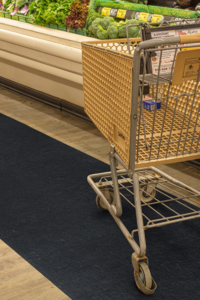
2. Line & Queue Areas (Lobbies, Banks, Grocery Stores)
Where people stand still, dirt settles. This is why queue lines build up grime quickly— and why adding mats in these spaces dramatically changes the appearance of your building. A nationwide Ipsos study on behalf of P&G Professional shows that 92% of customers won’t come back to a business if it feels dirty—and floors are one of the first things they notice.
Think about places like:
- Checkout lanes
- Customer service counters
- Bank teller lines
- Pharmacy pickup lanes
- DMV queues
- Reception waiting areas
Why queue floor mats matter:
- Absorb moisture and debris that collect under idle feet
- Reduce wear patterns in flooring from repeated foot traffic
- Improve customer experience by keeping waiting areas clean
- Provide traction in spaces where spills from carts or boots occur
3. Elevators (Especially Ground-Level Units)
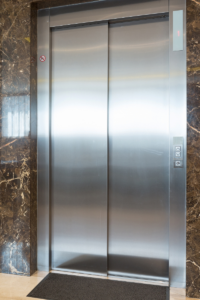
If you’re deciding where to put floor mats in your commercial building, you might be surprised to learn that elevators should always be on the list.
Ground-level elevators act like dirt elevators… literally. They are responsible for tons of dirt and debris coming into your building – like parking lot dust and dirt, as well as slush salt, sand, grass clippings and moisture – bringing it all up and down all day long.
Why elevator areas need mats:
- Reduces slip risks on smooth elevator flooring
- Prevents dirt from being redistributed to every floor
- Protects flooring from scratches caused by carts and deliveries
- Improves overall appearance in one of the most visible spaces
Pro tip:
Low-profile, high-traction mats work best here, so doors close smoothly and wheelchairs, walkers, strollers, and carts roll easily – staying compliant with ADA regulations, too.
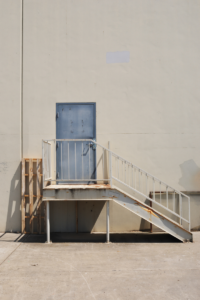
4. Back & Employee Entrances
When people ask where to put floor mats, they almost always forget this one — even though it’s often the dirtiest entrance in the entire building.
Employees enter through:
- Parking lots
- Loading docks
- Sidewalks covered in snow, salt, and mud
- Unpaved surfaces in industrial facilities
And because these entrances aren’t guest-facing, they get overlooked, even though they see some of the heaviest foot traffic.
Why floor mats are essential in employee entrances:
- Captures parking-lot grime, salt, and snow
- Prevents slip risks in poorly lit areas, especially for those opening early or closing late
- Keeps mess from spreading into production, office, or retail areas
- Protects floors from abrasive debris workers bring in
During Wisconsin winters, employee entrances can track in just as much slush as your front door! Mats at any entrance are non-negotiable, so don’t skip the entrance your employees use most.
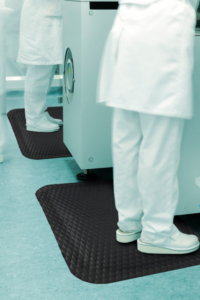
5. Behind Service Counters, Desks & Workstations (Anti-Fatigue Zones)
Any employee who stands for long periods needs support — not just for comfort, but for safety and long-term health.
Industries that benefit most from anti-fatigue mat placement include:
- Retail cashiers & customer service reps
- Hair stylists, barbers, estheticians
- Veterinary techs & veterinarians
- Dog groomers
- Receptionists
- Pharmacy staff
- Manufacturing & packaging workers
- Food service counters
- Hotel front desk associates
Why anti-fatigue mats matter at workstations:
- Reduce leg, knee, back, and foot strain
- Improve posture and circulation
- Increase productivity and attention
- Prevent slips caused by “micro-movements” on hard floors
- Support long shifts by reducing bodily stress
FACT: Research shows anti-fatigue mats noticeably reduce discomfort and help people stay steadier on their feet.
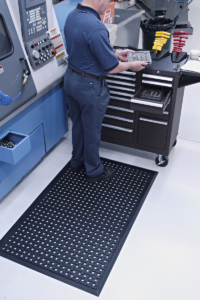
6. Warehouse Aisles, Shipping Stations & Production Areas
Work zones with cutting, packaging, or sorting activities benefit from mats that trap fine debris before it spreads through the facility. Warehouses deal with a unique mix of hazards, including:
- Pallet debris
- Dust and powders
- Liquids from containers
- Sawdust or packaging scraps
- Moisture from docks
- Grease near machinery
Without proper matting, these hazards can move quickly — leading to slips, damaged floors, and even cross-contamination into office areas.
Why mats are critical in warehouses:
- Define safe walk paths
- Provide high-traction surfaces in spill-prone zones
- Reduce fatigue for workers standing on concrete
- Keep debris contained and localized
- Protect floors from pallet drag and cart wheels
Injuries and illnesses occur in warehouses at more than twice the rate seen in other industries, underscoring how critical proper safety measures—like matting—really are.
7. Restrooms, Locker Rooms & Transitional Spaces
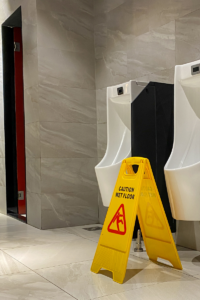
Water, humidity, tile flooring, and fast foot traffic make restroom thresholds one of the most hazardous zones in any facility. A CDC analysis of national injury data estimates that over 230,000 bathroom-related injuries are treated in U.S. emergency rooms each year, and more than 80% of them are caused by slips and falls.
These areas often include:
- Locker room exits
- Restroom entrances
- Changing rooms
- Shower-adjacent walkways
Why mats improve safety in restroom areas:
- Absorb water tracked from sinks or showers
- Provide traction on smooth tile
- Reduce slip risks during peak usage times
- Help maintain cleanliness by containing moisture
- Prevent water from being tracked into adjacent halls and work areas
Bonus Tip: Update Your Matting Regularly as Your Space Evolves
Knowing where to put floor mats is only step one. Step two? Reevaluate your matting plan regularly.
Most organizations forget to update mats after:
- Remodels or layout changes
- New equipment or workstations are added
- Department expansions
- Staff role shifts
- Seasonal weather changes
- Increases in customer traffic
Even minor environmental shifts change foot-traffic flow — and therefore change where mats should go.
Regular check-ins from your Packerland Mat Expert keep your facility safer and cleaner with minimal effort.
Packerland Rent-A-Mat Helps You Put Mats Exactly Where They Belong
Whether you’re covering the main lobby or the quiet corners nobody thinks about, Packerland can help you build a matting plan that adapts to your space — and evolves with your business.
Make sure your business stays clean, safe, comfortable, and compliant no matter what gets thrown your way.
Get a free site evaluation to make sure all your spaces are covered today!